

Stuck right nowWinter
Frozen or seized car lock in Halifax: what to do after freezing rain
In Halifax the car lock rarely freezes from deep cold alone. It is rain, slush and salt that get in and set overnight. Here is what to try and what to avoid.
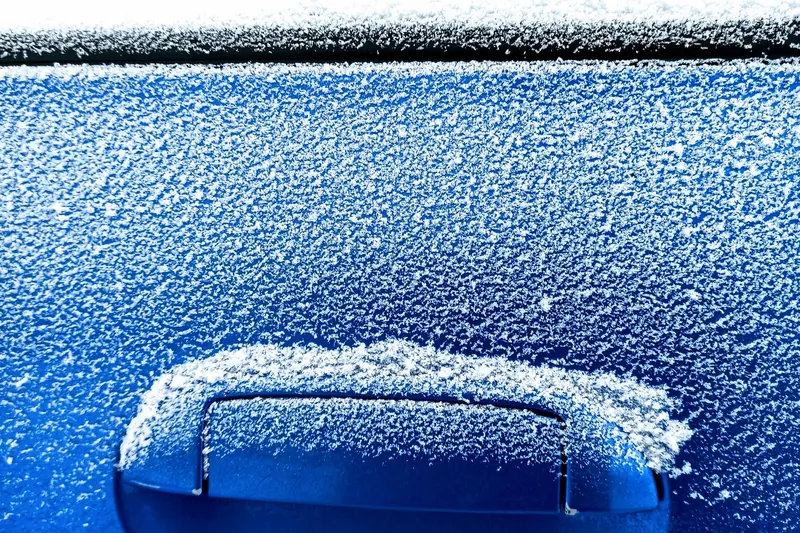
Halifax car locks seldom freeze from cold alone. Freezing rain glazes the door, a thaw sends slush into the keyhole, and road salt slowly corrodes the cylinder until it barely turns. Most mornings, the fix is simple: try every door, use lock de-icer, never hot water, and stop before you force anything. If the lock is stiff even on a mild day, the problem may be salt, not ice, and that needs a different approach.
Here is how to work through it, in the order that saves you the most trouble.
Have I tried every door and the hatch?
Start there, every time. Ice and wet snow rarely coat a car evenly. The side that faced the wind or the slush from passing traffic takes the worst of it, and the far door or the hatch may open without a fight. AAA's first tip for a frozen lock is the same: if the fob isn't helping, try the locks on your other doors (AAA via 6abc).
Once you are inside through any door, start the engine and run the heat. A stuck door often lets go from the inside within a few minutes as the cabin warms.
Try every other door and the hatch. Once you're in, start the car and let the heat work.
The car is glazed in ice from freezing rain
Freezing rain leaves a hard, clear shell over the whole car, sealing door seams, handles and keyholes at once. Don't attack it with a scraper edge, a key or anything metal near the paint and the lock.
- Crack the glaze with pressure. Press the heel of your hand firmly along the door seam and around the handle. The thin shell usually breaks along the gap.
- Clear the keyhole cover. Many cars have a small cap over the driver's lock. Ease ice off it with a plastic scraper rather than prying.
- Use de-icer on the lock, not the whole door. Spray into the keyhole and wait before trying the key.
If the shell is thick and every door is sealed, patience and a remote starter (if you have one) do more than force.
Press firmly around the door edge to crack the glaze. Don't chip at it with anything metal.
Why is hot water a bad idea?
Pouring hot water is the trick everyone has heard of, and it backfires. AAA says plainly never to pour hot or boiling water on your car, since it can crack the glass. And when the glass survives, the water runs straight into the lock, the latch and the seals. After a freezing rain storm, with more cold on the way, it sets again within minutes, deeper inside the lock than before.
Lock de-icer is the right tool. It melts ice inside the cylinder and evaporates instead of freezing again. Squirt it in, give it a moment, then try the key with gentle pressure.
Where you keep it matters. CAA's winter kit advice is to carry lock de-icer on you rather than leaving it in the vehicle (CAA emergency kit). A can in the glovebox can't help when the door won't open.
Never pour hot water on the car. It can crack the glass and it refreezes in the lock. Use lock de-icer.
Out of de-icer? What works from a coat pocket
Hand sanitizer is the stopgap most people are carrying. AAA suggests a little hand sanitizer or isopropyl alcohol on the key so it slides in, then turning gently. The alcohol lowers the freezing point of the ice it touches.
You can also warm the key:
- Hold the metal blade in your gloved hand for a minute, or warm it with your breath through cupped hands.
- Keep heat away from the plastic head. It may hold a transponder chip or a remote, and melting it adds a second problem.
- Never bring a lighter or any flame near de-icer. Most contain alcohol and burn easily.
Push the warm key in, wait a few seconds, and turn lightly. Repeat a few times rather than leaning on it.
A little hand sanitizer on the key, or warm the blade in your hand. Keep any flame away from de-icer.
Is it ice or salt corrosion?
Two different problems can feel the same at the door.
| What you notice | Likely cause | What helps |
|---|---|---|
| Lock fine yesterday, stuck after rain, slush or a thaw then a freeze | Ice in the cylinder | De-icer, a warmed key, patience |
| Lock stiff for weeks, worse in winter, gritty even on a mild day | Salt corrosion in the cylinder | A lubricant made for locks, or a locksmith |
| Key turns, door won't open | Seal frozen to the frame | Pressure around the door edge, cabin heat |
Salt spray from the roads and the sea air near the harbour corrode exposed metal, and a door cylinder that only gets used when the fob dies is the one most likely to seize. De-icer does nothing for corrosion. Forcing a seized cylinder is the most common way keys snap.
That points to salt corrosion, not ice. De-icer won't fix it, and forcing it can snap the key.
Key turns, door stays shut
If the key turns but the door won't move, the lock has done its job. Water has frozen the rubber seal to the frame, and hauling on the handle can tear the seal or break the handle.
Try this:
- Lean into the door and press firmly all around the edge to break the ice bond.
- Pull the handle and hold it out while you rock the door gently in and out.
- If that fails, get in another door, start the car and let the heat loosen the seal.
If the handle goes slack or springy and doesn't return, leave it alone. A broken latch rod inside the door is a far bigger job than ten minutes of waiting.
That's the seal, not the lock. Push in around the edge before pulling, and don't yank the handle.
What if the key starts to bend?
Stop turning. A frozen or corroded lock is an inconvenience. A key broken off in the cylinder is a repair: de-icer can't reach past it, the broken piece has to be extracted, and you may need a new key cut. Car keys are softer than they look, and a cold key twisting in a stuck cylinder can give way sooner than you expect.
A visible twist in the blade is your warning. Switch to de-icer or make the call.
This one is a call, not a fix.
Stop turning. A key broken off inside the cylinder has to be extracted and may need replacing.
Still can't get in? Car lockout helpHow do I stop freeze-thaw and salt seizing my locks?
A few habits prevent most stuck mornings on the coast:
| Habit | Why it helps |
|---|---|
| Dry the door seals after rain or wet snow before the car sits overnight | No water on the rubber means nothing to freeze the door shut |
| Treat the seals before winter | AAA suggests a spray like WD-40 on the inside of the seal, or petroleum jelly if that is what you have |
| Unlock with the fob, not the key | The cylinder stays closed and dry, so water has less chance to get in |
| Rinse salt off the car during mild spells, door sills and handles included | Less salt left sitting on the lock and hinges between storms |
| Turn the key in the door lock now and then | A cylinder that moves regularly is less likely to seize from corrosion |
| Keep de-icer in your coat, not the car | It is there when the door won't open |
If you depend on the fob, know what to do when it acts up in the cold and damp. That is covered in key fob not working in cold weather.
On remote starters: they help on an iced-up morning, but never leave the only key inside a running car, and never remote-start a car in a closed garage. Health Canada advises against idling a vehicle in the garage even with the door open, because carbon monoxide can build up and seep into the house (Health Canada). If a child or pet is locked inside a car, call 911 first.
The free printable covers this, so you can tick it off once and keep it.
When is it time to call a locksmith?
Call once you have tried the other doors, de-icer and a warmed key, and the next step would be force. That is when a stuck lock becomes a broken one. Call as well if:
- the key has bent or broken off in the lock,
- the lock is seized and won't turn even on a mild day,
- the keys are locked inside the car,
- a door was forced and now won't latch or lock.
A locksmith has tools for opening a car without prying at the door, and can extract a broken key or deal with a cylinder that has stopped working. If you are locked out right now, go to car lockout help.
If it is your garage door that has frozen to the slab, the causes and fixes are different: see garage door won't open in cold weather. And if the key itself is gone, read can a locksmith make a car key without the original.
This one is a call, not a fix.
Call before force turns a stuck lock into a broken one.
Still can't get in? Car lockout helpQuestions people ask
- Why does my car lock freeze more after a mild spell?
- Because water is what freezes. A thaw or a rainy day lets water and slush run into the lock and the door seals, and when the temperature drops again overnight it sets solid. A steady cold, dry week is often easier on locks than a week that swings above and below freezing.
- Is pouring hot water on a frozen car lock safe?
- No. AAA warns never to pour hot or boiling water on a car, because it can crack cold glass. The water also runs into the lock and the seals, where it freezes again, often harder than before.
- Can road salt make a car lock stop working?
- Yes. Salt spray and slush from salted roads speed up corrosion, and a door cylinder that is rarely used can seize. De-icer won't free corrosion. A lubricant made for locks may help a stiff one, and a seized one needs a locksmith rather than force.
- How do I stop my car doors freezing shut?
- Dry the rubber seals before the car sits overnight after rain or wet snow, treat the seals before winter, unlock with the fob so the key cylinder stays sealed, and keep de-icer in your coat rather than the glovebox.
Still stuck? Call, and a person answers.
Open 24 hours, 7 days. Tell us which one it sounds like, or text a photo first.
Still can't get in? Car lockout help · You approve the price before we start.
Keep reading
All guides Right now
Garage door won't open on an icy morning? Freeze-thaw, freezing rain and salt
Halifax winters rarely stay frozen. They melt, refreeze and glaze everything in ice, and that is what sticks garage doors. Here is how to find the cause and what is safe to try.
 Plan ahead
How to winterize a garage door for a Halifax winter
Salt air, freeze-thaw ice and storm outages are what stop garage doors here. A one-afternoon routine for the fall, and the signs that mean call a technician.
 Plan ahead
Swapping keys for fobs: access control for a small business
Seasonal staff, part-timers and a back door nobody can account for. Here is how fob and card access works for a small business, and what coastal weather asks of the hardware.