

How to winterize a garage door for a Halifax winter
Salt air, freeze-thaw ice and storm outages are what stop garage doors here. A one-afternoon routine for the fall, and the signs that mean call a technician.
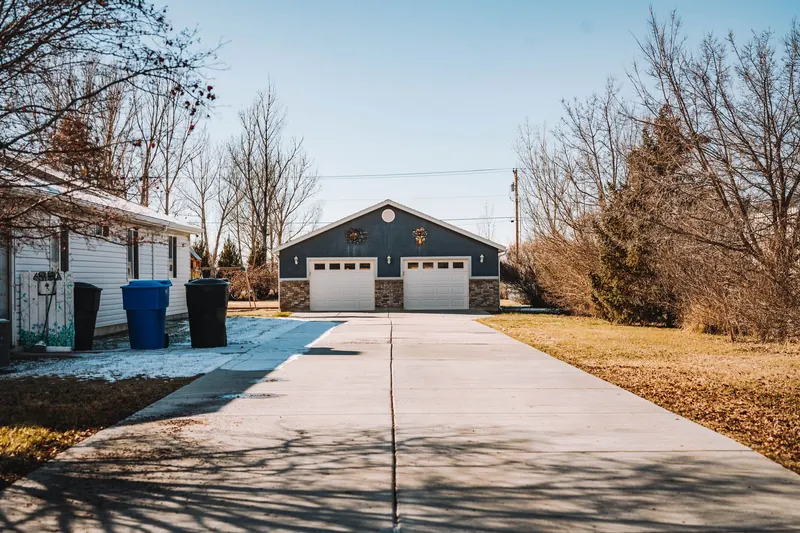
Garage doors around Halifax don't usually fail from deep cold. They fail from salt air working on the steel, from meltwater freezing the bottom edge to the floor overnight, from heavy wet snow, from storm wind, and from power cuts that leave people pulling at a door they've never opened by hand. An afternoon in the fall covers all of it: the balance test, a look for rust, lubrication, the bottom seal, the manual release and the opener's safety check.
Go through it in this order. There's a printable checklist at the end.
Start with the balance test
This one tells you whether the springs are healthy. The springs carry the weight of the door; the opener only steers it. As springs weaken, the opener strains, and the strain shows up on the worst morning of the winter.
The steps below follow the door and opener makers' advice (Garaga, Chamberlain):
- Close the door all the way. Use the release only when the door is down.
- Pull the red release cord so the door is no longer connected to the opener.
- Raise the door by hand to roughly halfway.
- Ease your grip off slowly, hands ready, feet out from under the bottom edge.
| What the door does | What it tells you |
|---|---|
| Holds its position | Springs are balanced; move on |
| Sinks toward the floor | Springs have weakened |
| Creeps upward | Springs are wound too tight |
| Barely lifts at all | Stop here; a spring may have broken |
If it fails, don't adjust the springs yourself. Garaga's maintenance advice is to leave spring adjustment to professionals, and the cables hold enough force to injure. Reconnect the opener as your manual describes and book a spring check. For how long springs normally last, see how long do garage door springs last.
This one is a call, not a fix.
Leave the springs alone. Reconnect the opener and book a spring check.
Garage door spring repairLook for salt rust on springs, cables and rollers
Salt reaches a garage door two ways here: in the sea air, and in the road slush your car carries in all winter. Both settle on bare steel. With the door closed and the light on, look along each side without touching anything:
- Springs. Orange staining, flaking or pitting on the coils. Rust adds friction between the coils and eats into the metal.
- Cables. Broken strands or rust near the bottom brackets, where salty meltwater sits longest.
- Bottom brackets. Rust at the base of the door where the cable attaches.
- Rollers. Wheels that wobble, are cracked, or don't turn because the bearing has seized.
Look, don't handle. Springs, cables, bottom brackets and drums are all under high tension. Rust on any of them is a reason to book a technician before the season, while it's a planned repair rather than a door stuck halfway on a January morning.
This one is a call, not a fix.
Springs, cables, bottom brackets and drums are under high tension. Look from a distance and have a technician deal with them.
Garage door spring repairLubricate the moving parts
The door industry's technical guidance is that lubricating the springs as the door maker's instructions require helps them last longer (DASMA TDS-190). On the coast it also leaves a film between the steel and the damp.
- Springs: a light spray along the coils. Garaga suggests a spray lubricant for overhead springs.
- Hinges, rollers and bearings: LiftMaster recommends white lithium grease here.
- Opener chain or screw drive: a light coat of white lithium grease. Belt drives don't need it.
- Tracks: no grease. LiftMaster advises against it, and grease in a track holds grit and salt. Wipe them clean.
Buy a product made for garage doors. Household oil or heavy wheel bearing grease turns sticky and collects dirt.
Use a garage door lubricant on the springs, hinges, rollers and bearings. Keep grease out of the tracks.
Stop freeze-thaw ice at the bottom seal
A Halifax winter swings above and below freezing again and again. Snow melts in the afternoon, runs under the door, and freezes overnight, gluing the bottom seal to the concrete. The next morning the opener pulls against ice.
- Check the seal. From inside with the door closed, look for daylight along the floor. The rubber should be soft and springy. Garaga advises replacing a brittle or cracked bottom seal right away.
- Treat it. Garaga recommends a silicone-based lubricant on the bottom weatherseal so it doesn't stick to the ground.
- Clear the threshold. Sweep away grit and sand so the seal sits flat, and shovel or chip slush away from the door edge before a cold night.
- Side and top weatherstripping. Look for splits and gaps where wind-driven rain gets in.
If the door is already frozen down, don't keep pressing the button. Garage door won't open in cold weather walks through freeing it safely.
A cracked or flattened bottom seal should be replaced. Silicone on the seal helps stop it bonding to ice.
Get ready for wet snow and storm wind
Nor'easters and post-tropical storms bring wind straight at a garage door, and wide doors catch a lot of it. Before storm season, watch the door on a breezy day:
- Does it bow inward, rattle loudly, or rub in its tracks when a gust hits?
- Are the track brackets tight against the wall, with no loose or missing bolts?
- Is anything stacked against the inside of the door that would stop it moving freely?
A door that flexes in the wind is worth having looked at. On wide doors, a reinforcing strut is a common fix. After heavy wet snow, clear the drift away from the bottom of the door before you open it, so the door isn't lifting against packed snow.
If the door is old, dented, rusted along the bottom panel, or simply can't keep the weather out, replacement may make more sense than repairs. Our guide to the best garage door for a cold climate covers insulation, seals and materials.
A door that flexes in a gust or rubs in its tracks is worth a look before storm season, not during it.
Learn the manual release before the power goes out
Storms take power out across the municipality, sometimes for a day or more, and a garage door opener does nothing without it. Find out how your manual release works now, in daylight, rather than with a flashlight in your teeth.
- Make sure the door is fully closed. A door with weak springs can drop fast if it's released while open.
- Pull the red release cord down and toward the door.
- Lift the door by hand. A balanced door should rise smoothly.
- While it's disconnected, the opener can't hold it shut. Use the door's slide lock, or keep the door closed and the house door locked.
- When the power returns, reconnect the opener as your manual describes.
Some openers can take a battery backup that keeps them running through an outage. If yours is due for replacement, it's worth asking about. Step by step, with photos of the common release types, is in garage door manual release.
Find the red cord now, in daylight, with the door closed. Lock the door by hand while it's disconnected.
Test the opener's safety reverse and batteries
Both of the opener's safety systems should be checked before winter.
Safety reverse. Lay a 2x4 flat across the floor under the door and close it with the opener. LiftMaster's standard is that the door must reverse on contact with a 1-1/2 inch object or a 2x4 laid flat. Garaga describes the same test with a block of wood or a brick.
Photo eyes. With the door open, start it closing and pass a broom handle through the beam near the floor. The door should stop and go back up. Fog, salt film and road spray cloud the lenses, so wipe both clean and check that both indicator lights are steady.
Batteries. Fresh batteries in the remotes and the outside keypad. Damp and cold both shorten their life.
If the door doesn't reverse, stop using the opener until it's fixed. A door that doesn't reverse can injure a child or a pet.
This one is a call, not a fix.
Stop using the opener until it's repaired. A door that doesn't reverse can hurt a child or a pet.
Garage door spring repairPrint the winter checklist
The Garage door winter checklist below puts the whole routine on one page: balance and springs, rust, lubrication, seals and the opener's safety checks. Go through it in the fall and again partway through the winter, after the first big storm.
If the door failed the balance test, you found rust on a spring or cable, or the door is heavy to lift by hand, book it now while it's a calm repair rather than an emergency in the middle of a storm. See garage door spring repair.
The free printable covers this, so you can tick it off once and keep it.
Open the garage door storm season checklistCall (902) 593-4044
Questions people ask
- Does salt air really damage a garage door?
- It speeds up rust on the steel parts: springs, cables, bottom brackets and roller bearings. Rust adds friction and weakens the metal, so a spring or cable can fail sooner. Lubricating the moving parts in the fall and looking for orange staining or fraying keeps you ahead of it.
- How do I open my garage door when the power is out?
- With the door fully closed, pull the red release cord to disconnect it from the opener, then lift it by hand. A balanced door lifts easily. Lock it manually while it's disconnected, and reconnect the opener once the power is back.
- My door is frozen to the floor. Should I force it?
- No. Running the opener against a frozen seal can tear the seal or strain the opener and cables. Free the bottom edge gently, clear the slush and ice along the threshold, and replace a worn seal once the weather allows.
Ready to sort it? Call or text.
Open 24 hours, 7 days. Tell us which one it sounds like, or text a photo first.
Garage door spring repair · You approve the price before we start.
Keep reading
All guides Right now
Frozen or seized car lock in Halifax: what to do after freezing rain
In Halifax the car lock rarely freezes from deep cold alone. It is rain, slush and salt that get in and set overnight. Here is what to try and what to avoid.
 Right now
Garage door won't open on an icy morning? Freeze-thaw, freezing rain and salt
Halifax winters rarely stay frozen. They melt, refreeze and glaze everything in ice, and that is what sticks garage doors. Here is how to find the cause and what is safe to try.
 Plan ahead
Swapping keys for fobs: access control for a small business
Seasonal staff, part-timers and a back door nobody can account for. Here is how fob and card access works for a small business, and what coastal weather asks of the hardware.