

Stuck right nowGarage doors
Power out in a storm? Using the garage door manual release safely
When a nor'easter takes the power, the red cord on the opener is how the car gets out. Pulled at the wrong moment it can drop a heavy door. Here is the safe way.
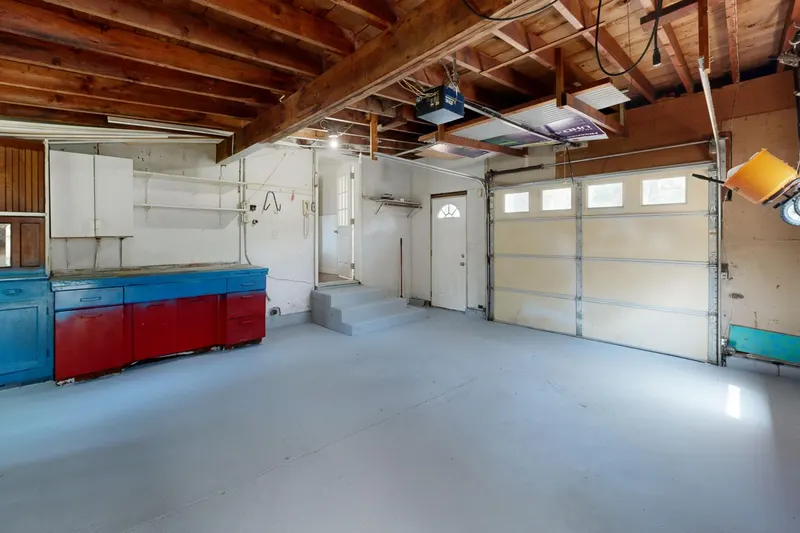
Nor'easters, wet snowstorms and the remains of tropical storms all bring outages to HRM, sometimes for longer than a day. That is when this cord matters, so it pays to know how it works before the lights go out.
Where is the manual release and what does it do?
Your opener drives a trolley along the rail on the garage ceiling, and the trolley is clipped to an arm bolted to the top section of the door. The red handle unclips the trolley. Once it lets go, the door is no longer attached to the motor and moves freely by hand, held up only by its springs.
Keep that last point in mind. The opener never carries the weight of the door. The springs do, every time.
First, look at the springs
Before touching the cord, look at the bar above the door. Most attached garages have a torsion spring: one or two long coils on a shaft across the top of the opening. A visible gap in a coil means it has snapped. Storms are noisy, but a sharp bang from the garage is worth investigating.
With a spring broken, the door can be far heavier than one person can control. Release the opener and start lifting, and the door can drop the instant your grip slips. If anything looks broken, leave the door down and call. Our guide to a broken garage door spring shows what to look for.
Chamberlain's support guidance lists more reasons to stop: a door that feels unusually heavy, won't stay open or slams shut, or springs, cables or rollers that look damaged (Chamberlain support).
This one is a call, not a fix.
If a spring looks broken, leave the door closed. Released with a broken spring, a door can slam down.
Car stuck behind the garage door?Is the door closed? Only then pull the cord
Chamberlain says to use the emergency release only when the door is fully closed, if possible (Chamberlain support). An open door is hanging on its springs and the opener together. If a spring is weak and you remove the opener from the equation, the door can come down fast onto whoever, or whatever, is underneath.
If the power cut out while the door was partway up, don't pull the release. Keep people, pets and the car out of the doorway and call.
This one is a call, not a fix.
Don't pull the release with the door open. Keep everyone out of the doorway and call.
Car stuck behind the garage door?Lifting the door by hand, step by step
Springs intact, door fully closed:
- Clear the opening. Move people, pets, bikes and bins away from the door.
- Undo the inside lock if the door has a manual slide bolt.
- Pull the red cord straight down. On some rail openers you pull down and then back toward the motor to keep the trolley disengaged.
- Grip the bottom section with your hands flat on the panel, never in the joints between sections, where fingers get caught.
- Lift together. A balanced door rises smoothly and stays where you leave it. If it resists or feels much heavier than expected, lower it and stop.
- Don't prop it. No shovels or lumber under the bottom edge. A door that won't stay up by itself has a spring problem.
The cord releases the door. It is not a handle, so don't pull the door up or down by it.
In high wind, get the car out and close the door again rather than leaving the garage open. An open door catches wind and lets the rain in.
Only with the door fully closed and the springs whole. Lift with a helper, and if it fights you, lower it.
Power's back: reconnecting the opener
When the power returns, the opener may run while the door sits still. That is because the trolley is still unhooked. Chamberlain's instructions for its common rail openers are to reset the release, by pulling the cord toward the opener or straight down depending on the rail, and then run the opener through a cycle. The trolley catches the door arm as it travels, and if it misses the first time, another full cycle usually does it (Chamberlain support).
Other brands work along similar lines with a different motion, so keep the manual or model number where you can find it. After an outage, also check:
- The opener light and wall button respond.
- The safety sensors near the floor show steady lights. If the door now won't close, see why a garage door won't close for the sensor checks.
- Remotes and the outside keypad work. Power surges and long outages can leave them needing attention; our guide on a garage door opener not working walks through the checks.
Reset the release the way your opener's manual shows, then run a full cycle so the trolley clicks back on.
Cord won't release, or there's no cord
A release that won't let go usually means the door is putting load on the trolley. In Halifax that is often a bottom seal frozen to the slab after wet snow or a thaw and refreeze, or something binding in the track. Don't hang your weight off the cord. Free the bottom seal gently and check the tracks are clear.
If the cord has snapped or been removed, the release lever is still on the trolley, but it sits up high among the moving parts. Getting to it means a ladder beside a door that may be under spring tension, in the dark if the power is out. That is the moment to call instead of improvising.
Don't hang off the cord. Check the bottom seal isn't frozen to the slab. If the cord is gone, call rather than climb a ladder beside the door.
Locked out of the garage with the power off
Some doors have a small keyed lock near the top of the outside panel. Chamberlain calls this an exterior emergency release: turning the key and pulling the lock disconnects the opener so the door can be raised by hand. It doesn't lift the door for you. Without an outside release or another way in, the door can't be operated from outside during an outage (Chamberlain support).
The inside release can also be a weak spot for break-ins, because a hook pushed through the top of the door can sometimes snag it. We cover that in how to stop garage break-ins. Protect the release, but never disable it. A storm outage is exactly when you need it.
Read this before you try anything else. Not sure? Call and we'll talk you through it.
Getting ready before storm season
Ten minutes on a calm fall day makes an outage much easier:
- Find the cord and make sure it hangs where an adult can reach it without a ladder.
- Do a balance check with the door fully closed and the springs whole: release it, lift it halfway with a helper, and see whether it stays put.
- Reconnect the opener afterwards with a full cycle.
- Ask about a battery backup. Some openers have one that can run the door a limited number of times during an outage. If yours does, check that the battery still holds a charge.
- Park with the storm in mind. If a big storm is forecast and you will need the car, consider leaving it in the driveway, away from trees.
The printable garage door checklist below covers the balance test and release check in more detail. For the wider fall routine, see how to winterize a garage door.
When to stop and call
Call when:
- A spring is broken, or you can't tell.
- The door is stuck partway open.
- A cable has come off its drum or is hanging loose.
- The door sits crooked in its tracks or a roller has jumped out.
- Your car is inside, you need it now, and the door won't lift safely.
The last one is the classic storm-morning call. If that is where you are, see car stuck behind the garage door. We will talk you through what is safe to try while you wait, and we fix the spring, cable or opener problem behind it.
Questions people ask
- How do I get my car out of the garage when the power is out?
- Look at the springs above the door first. If they are whole and the door is fully closed, pull the red emergency release cord hanging from the opener's trolley, then lift the door by hand from the bottom section with someone helping. If the door is very heavy or won't stay up, lower it and call.
- Why won't my opener lift the door after the power comes back?
- The trolley is still disconnected from the door. On many Chamberlain and LiftMaster rail openers you reset the release by pulling the cord toward the opener or straight down, then run the opener through a cycle so the trolley clicks back on. Your opener's manual shows the exact motion for your model.
- Should I leave the garage door open during a storm?
- No. Keep it closed through high winds. An open door lets wind and rain into the garage, and a closed door stays in its tracks and on its springs. Plan ahead so you are not trying to move the car mid-storm.
Still stuck? Call, and a person answers.
Open 24 hours, 7 days. Tell us which one it sounds like, or text a photo first.
Car stuck behind the garage door? · You approve the price before we start.
Keep reading
All guides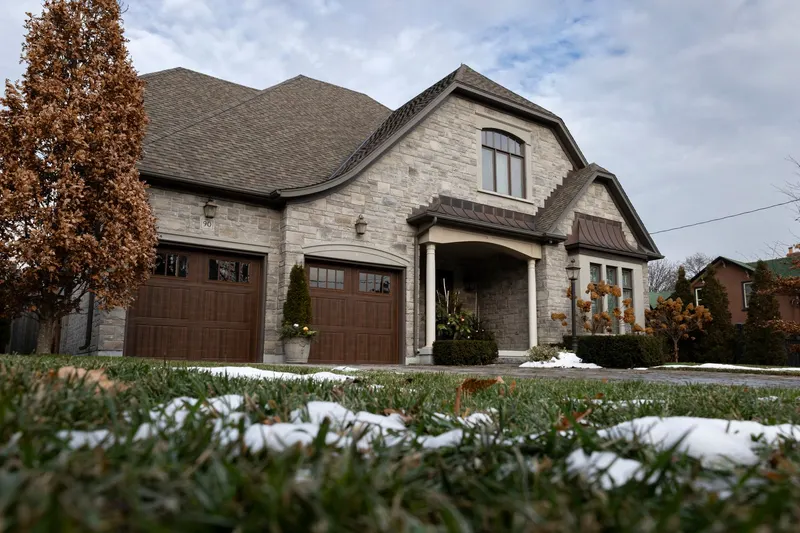 Plan ahead
The best garage door for Halifax weather: salt air, wind and freeze-thaw
Salt air, coastal wind and a winter that freezes and thaws all season ask different things of a garage door. Here is what to look for, part by part.
 Right now
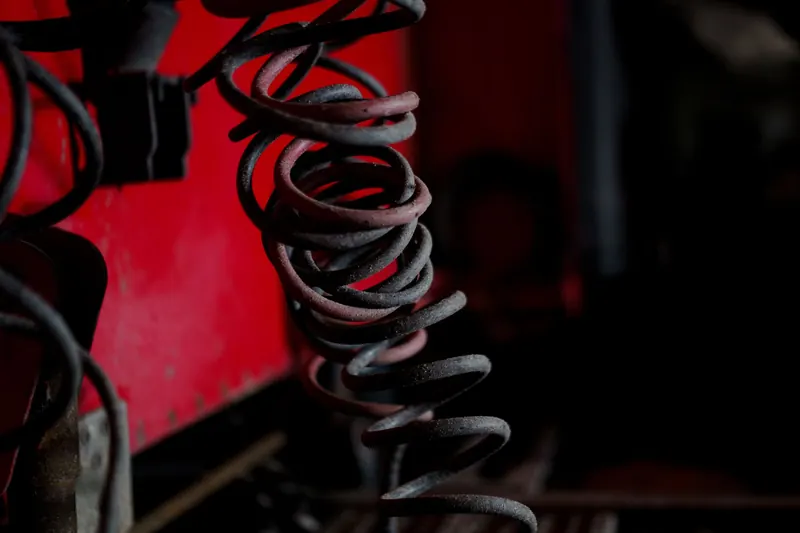
Broken garage door spring? How to spot it and what to leave alone
A snapped spring turns a garage door into a dead weight. Here is how to recognise it in a minute, why coastal garages see it often, and how to keep everyone safe until it's fixed.
 Right now
Garage door opener stopped working? A quick checklist before you call
Storm outages, a lock button pressed by accident, a damp keypad: most openers that stop working have a simple cause. Here is the order to check them in.