

Stuck right nowGarage doors
Broken garage door spring? How to spot it and what to leave alone
A snapped spring turns a garage door into a dead weight. Here is how to recognise it in a minute, why coastal garages see it often, and how to keep everyone safe until it's fixed.
How can I tell the spring has snapped?
Run through this quick check, from the house side of the garage if you can:
- Did you hear a bang? People describe it as a gunshot or a heavy shelf falling, usually with nobody touching the door. Amarr notes a broken torsion spring can bang loudly while the broken pieces stay on the bar (Amarr).
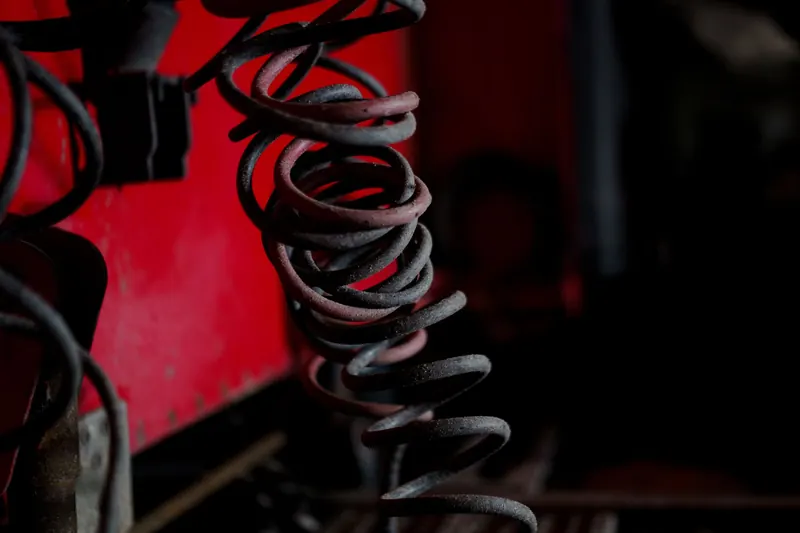
- Look at the coil. A sound spring is one tight, continuous coil. A broken one has a clear open space, as though a slice was cut out of it.
- Watch what the opener does. It strains, lifts the door a few inches and stops, or reverses, or runs while the door hardly moves.
- Look at the door itself. It may sit crooked, higher on one side, with a cable hanging slack at a bottom corner.
- Remember the last close. A door that slammed down instead of settling softly is another sign.
You only need one of these. The split in the coil, on its own, settles it.
This one is a call, not a fix.
A split in the coil is all the proof you need. Leave the door where it is.
Garage door spring repairWhich kind of spring does my door use?
| Torsion | Extension | |
|---|---|---|
| Location | On a bar across the top of the opening | Beside each horizontal track, near the ceiling |
| Action | Twists to store energy | Stretches to store energy |
| When broken | An open split in the coil on the bar | A spring hanging loose or on the floor |
| Typical door | Most doors fitted today | Older doors; Amarr calls them the older technology |
Both are dangerous when they let go. An extension spring without a safety cable through its middle can whip across the garage, and Amarr warns that parts can fly. If one is hanging loose, don't reach in to tidy it up.
This one is a call, not a fix.
A broken extension spring can lash out, and loose parts can fly. Stay well back from it.
Garage door spring repairWhy is running the opener a bad idea now?
The opener isn't a lifting machine. It guides a door that the springs have already balanced to feel almost weightless. Take a spring away and the opener is hauling the door's full weight, which is how gears strip, the top section bends where the opener arm attaches, and cables snap.
Lifting by hand carries the same risk from the other direction. Chamberlain warns that a door with weak or broken springs may fall rapidly and without warning (Chamberlain). That's enough weight to crush a hand, a foot or the hood of a car.
Leave the hardware alone, too. Garaga, a Canadian door maker, is blunt that torsion springs can be very dangerous (Garaga). Cables, drums and bottom brackets are all under the same load.
If the power is out after a storm and your car is inside, a broken spring rules out the manual release. Read garage door manual release for the checks to do before pulling that cord on any door.
This one is a call, not a fix.
The opener can't do the springs' job. Stop pressing the button before it strips a gear or the door drops.
Garage door spring repairOne spring is gone but the door still runs. Can I keep using it?
No. A two-spring door shares its weight between both. When one breaks, the survivor is carrying a load it was never sized for, the door is out of balance and the opener is fighting it. That spring was installed the same day as the broken one and has done every cycle alongside it, so it's worn just as much and now overloaded on top. When it goes, nothing holds the door.
A door with one broken spring is a door with a broken spring. Stop using it and book the repair.
This one is a call, not a fix.
The remaining spring is carrying the whole door now and can fail next. Park the door until it's repaired.
Garage door spring repairWhy do springs fail in a salty, damp garage?
Every spring wears out eventually, because each open and close flexes the steel until it fatigues and cracks. What a coastal garage adds is corrosion, and corrosion speeds that wear up.
The door industry's technical sheet on spring life says rust reduces the effective area of the spring wire and its strength, and that corrosion pits can let fatigue cracks grow faster (DASMA TDS-190). The same sheet advises that doors near a saline coast, or in places with frequent precipitation, be kept closed where possible.
In Halifax that covers most garages: salt air near the harbour and the shore, road salt carried in on cars, and fog and wet spells that keep the inside of an unheated garage damp. A spring with rust along the coils, working a door that's stiff after a freeze-thaw night, is a likely candidate to snap.
How long springs normally last, and how to work out where yours are, is in how long do garage door springs last.
Read this before you try anything else. Not sure? Call and we'll talk you through it.
What happens on a spring repair visit?
A proper repair covers the whole counterbalance, not just the broken coil:
- Sizing the new spring to the door's weight, height and drum, so a heavier insulated door gets a stronger spring.
- Looking at both springs on a two-spring door, since they've worked the same cycles.
- Inspecting cables, drums and bottom brackets for damage from the shock of the break, and for salt corrosion.
- Balancing the door so it stays put when lifted halfway by hand.
- Testing the opener's safety reverse once the door is balanced again.
Garage doors are a 24/7 service. Until we arrive, leave the door as it is and keep everyone clear of it, then book garage door spring repair.
If the springs look intact and the door is stuck on an icy morning, the cause lies elsewhere; see garage door won't open in cold weather.
Questions people ask
- Can I lift my garage door by hand if the spring is broken?
- Don't. The springs carry most of the door's weight, so with one gone the door is far heavier than it looks and can come down suddenly. Chamberlain warns that a door with weak or broken springs may fall rapidly and without warning. Keep people and cars clear and call.
- Why did my spring break when the door was barely used this week?
- Springs fail from accumulated wear, not from one day's use. A spring weakened by years of cycles, and by rust from salt air or a damp garage, can let go on any cycle, including one on a quiet week.
- How do I know if I have torsion or extension springs?
- Torsion springs sit on a steel bar above the top of the door. Extension springs run alongside the horizontal tracks near the ceiling, one on each side. Amarr describes extension springs as the older technology, mostly found on older homes.
Still stuck? Call, and a person answers.
Open 24 hours, 7 days. Tell us which one it sounds like, or text a photo first.
Garage door spring repair · You approve the price before we start.
Keep reading
All guides Plan ahead
The best garage door for Halifax weather: salt air, wind and freeze-thaw
Salt air, coastal wind and a winter that freezes and thaws all season ask different things of a garage door. Here is what to look for, part by part.
 Right now
Power out in a storm? Using the garage door manual release safely
When a nor'easter takes the power, the red cord on the opener is how the car gets out. Pulled at the wrong moment it can drop a heavy door. Here is the safe way.
 Right now
Garage door opener stopped working? A quick checklist before you call
Storm outages, a lock button pressed by accident, a damp keypad: most openers that stop working have a simple cause. Here is the order to check them in.