

Stuck right nowWinter
Garage door won't open on an icy morning? Freeze-thaw, freezing rain and salt
Halifax winters rarely stay frozen. They melt, refreeze and glaze everything in ice, and that is what sticks garage doors. Here is how to find the cause and what is safe to try.
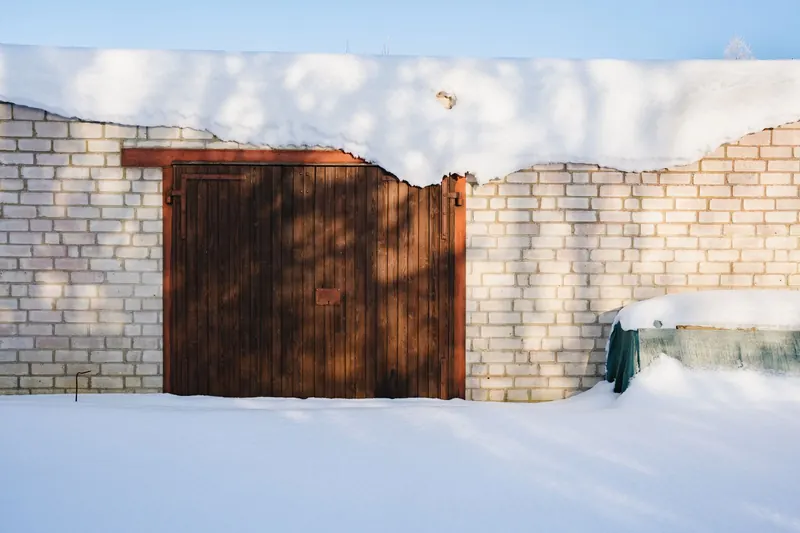
Work through these in order. The first check keeps you safe; the rest find the cause.
Check the springs before anything else
Look up at the steel bar above the top of the door. A broken torsion spring shows an open split in the coil, and it usually announces itself with a loud bang. Older doors may have extension springs running beside the side tracks instead.
If a spring is broken:
- Stop pressing the opener. It can't lift the full weight of the door.
- Don't lift the door by hand, and don't pull the release with the door partly open. Chamberlain warns that a door with weak or broken springs may fall rapidly and without warning (Chamberlain).
- Don't touch the spring, the cables or the bottom brackets. They are all under heavy tension.
What to look for and why springs go is in garage door spring broken. Springs intact? Carry on.
This one is a call, not a fix.
Don't run the opener, lift the door or touch the spring, cables or brackets.
Garage door repairHas the bottom seal frozen to the slab?
This is the Halifax pattern. Wet snow falls off the car or blows under the door, a mild spell turns it to water along the threshold, and the overnight freeze bonds the rubber seal to the concrete. In the morning the opener hums, lifts the door an inch, and stops or reverses.
Garaga, a Canadian door maker, says not to run an electric opener on a door stuck in ice, because it can seriously damage the motor (Garaga). Instead:
- Make sure the door is fully closed, then pull the red release cord to disconnect the opener.
- Unlock the inside slide lock, if the door has one.
- Tap along the bottom of the door with a hammer against a piece of 2x4. The wood spreads the blow so the ice cracks and the panel doesn't dent.
- Scrape the remaining ice off the floor with a plastic scraper, working along the concrete rather than at the rubber.
- Dry the threshold so nothing is left to refreeze tonight.
Keep the shovel and the ice chopper away from the seal. A torn seal lets more water in, and more water means more frozen mornings.
Stop the opener. Release it with the door closed, tap the ice loose with a hammer and a 2x4, and dry the floor.
Did freezing rain glaze the door or tracks?
Freezing rain is the other Halifax special. It coats whatever it lands on, and a garage door can end up sealed along its edges, with ice in the gaps between sections and along the parts of the track nearest the opening.
- Look before you press. If the door and frame are visibly glazed, don't let the opener fight it.
- Clear the edges where the door meets the frame and the gaps between sections by hand, gently, with a plastic scraper.
- Check the lower track sections for ice that would stop a roller.
- Don't strike the panels hard. Steel skins dent, and a dented section can bind in the track afterwards.
Once the edges and tracks are clear, lift the door by hand with the opener released. If it moves freely, reconnect the opener as your manual describes.
Clear ice from the tracks and the door edges by hand. Don't force the door through it.
Are the rollers and hinges stiff or rusted?
Two things stiffen a door over a coastal winter. Grease thickens in the cold, and salt air and road salt corrode rollers, bearings and hinges until they drag. A door with both problems feels heavy and jerky by hand, or squeals and shudders as it runs.
LiftMaster's guidance is to lubricate the rollers, bearings and hinges with white lithium grease and to leave the tracks ungreased. Choose a garage door lubricant rated for cold, and do it in the fall rather than mid-January. If a roller is rusted solid or a hinge is cracked, lubricant won't save it; those parts get replaced. The fall routine is in how to winterize a garage door.
Lubricate rollers, bearings and hinges with white lithium grease. Leave the tracks dry.
Is the power out after the storm?
Nor'easters and ice storms take down power lines, and without power the opener can't move the door, frozen or not. If the springs are intact and the door is fully closed, the manual release lets you lift it by hand; the safe steps are in garage door manual release. If the door is iced to the floor as well, free the seal first, as above.
When the power returns, the door stays disconnected until you reconnect it, which is why so many openers seem dead the day after a storm.
A word on carbon monoxide. If you're waiting out a cold morning, don't start the car in the garage to warm up. Health Canada advises against idling a vehicle in a garage even with the door open, because carbon monoxide builds up and can get into the house (Health Canada). Wait inside, and run the car only once it's out on the driveway.
Use the manual release only with the springs intact and the door fully closed. Never run the car in a closed garage.
Does the opener stop or reverse partway?
Openers sense how hard they're working. A door made stiffer by cold grease, rust or a dragging seal can push past that limit, so the opener stops or reverses as if it hit something.
Resist the urge to turn the force up. LiftMaster says never to use the force adjustment to make up for a binding or sticking door, and never to set it beyond the minimum needed to close the door (LiftMaster). Extra force means the door can crush something before it reverses.
The order is: free the door, lubricate it, check that it balances by hand, and only then look at the opener. After any change, test the safety reverse: the door must reverse when it closes on a 1-1/2 inch object or a 2x4 laid flat.
If only the remote or the outside keypad has stopped working while the wall button still runs the door, see garage door opener not working; a cold battery or the lock button is the usual answer.
Leave the force setting alone. Free and lubricate the door first, then test the safety reverse.
How do I keep it from freezing shut again?
- Keep the threshold dry. Garaga suggests clearing snow from in front of the door as it falls and knocking snow off the car before you drive in.
- Treat the bottom seal. Garaga recommends a silicone-based lubricant on the bottom weatherseal so it doesn't stick to cold ground.
- Watch the forecast for freezing rain and run the door once before the ice arrives, then again in the morning before you need it.
- Wipe salt and grime off the lower door, rollers and tracks on mild days through the winter.
- Keep the door closed when you can. The industry's technical sheet on spring life advises keeping doors closed in places with frequent precipitation or near a saline coast (DASMA TDS-190).
- Replace a cracked or flattened seal in the fall, not after it has frozen down twice.
If the seal is free and the door still won't move, the springs look wrong, or the opener keeps reversing on a door that lifts easily by hand, that's when to call. Garage doors are a 24/7 service: see garage door repair.
The free printable covers this, so you can tick it off once and keep it.
Questions people ask
- Why does my garage door freeze shut when it isn't that cold?
- Because it's the thaw that does it. Snow melts off the car or runs under the door during a mild spell, then refreezes overnight and locks the rubber bottom seal to the concrete. A few degrees either side of freezing is enough.
- How do I free a garage door frozen to the ground?
- Stop pressing the opener. With the door closed and the springs intact, pull the release cord and work the seal free by hand. Garaga suggests tapping along the bottom of the door with a hammer against a piece of 2x4, then scraping the leftover ice off the floor and drying the threshold.
- Can salt make my garage door stiff?
- Over time, yes. Salt air and road salt corrode rollers, hinges and bearings, and a rusty roller drags in the track. In cold weather, with grease already thickened, that extra drag can be enough to make the opener stop or reverse.
Still stuck? Call, and a person answers.
Open 24 hours, 7 days. Tell us which one it sounds like, or text a photo first.
Keep reading
All guides Right now
Frozen or seized car lock in Halifax: what to do after freezing rain
In Halifax the car lock rarely freezes from deep cold alone. It is rain, slush and salt that get in and set overnight. Here is what to try and what to avoid.
 Plan ahead
How to winterize a garage door for a Halifax winter
Salt air, freeze-thaw ice and storm outages are what stop garage doors here. A one-afternoon routine for the fall, and the signs that mean call a technician.
 Plan ahead
Swapping keys for fobs: access control for a small business
Seasonal staff, part-timers and a back door nobody can account for. Here is how fob and card access works for a small business, and what coastal weather asks of the hardware.