

Stuck right nowGarage doors
Garage door won't close? Fogged sensors, low sun and other causes
A door that won't close is a security gap as soon as it gets dark. Start with the two sensors by the floor, then work through the rest.
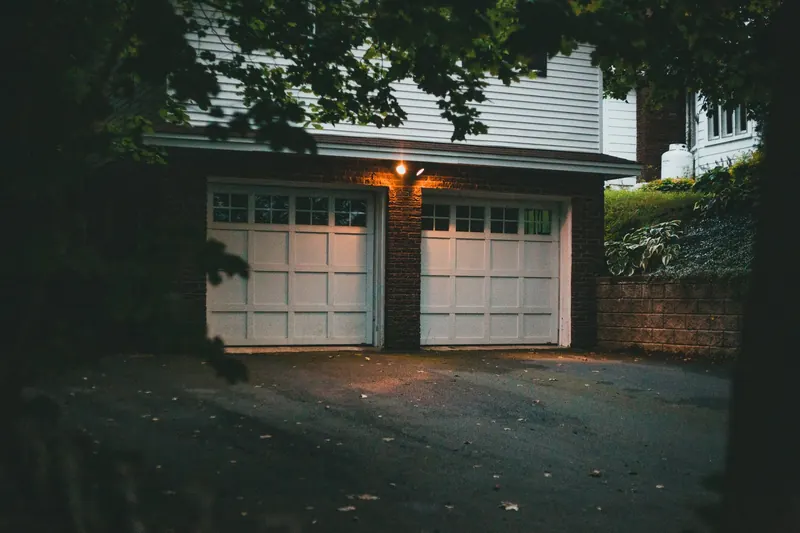
An open garage door after dark is an invitation into the garage and often into the house, so below is the order to check, and how to make the door safe tonight if the fix has to wait.
Why does it close only while I hold the button?
Because holding the wall button bypasses the sensors on many openers. The door goes down even though the opener believes something is in the way. LiftMaster's guidance is that a door that closes only while the button is held needs its safety sensor system checked (LiftMaster).
Some openers don't offer this override at all, so check your manual. Where it works, use it only while you stand and watch the door all the way to the floor, with nobody and nothing underneath.
That's the sensors talking. Only use the hold override while you watch the door the whole way down.
Are the safety sensors dirty, wet or out of line?
LiftMaster's manuals place the beam no higher than 6 inches (15 cm) above the floor. On LiftMaster and Chamberlain openers the sending sensor shows an amber light and the receiving sensor a green one; other makes use their own colours.
Work through these:
| Check | What to look for | Fix |
|---|---|---|
| Indicator lights | Both should be steady; a dim, flickering or dark receiver light means no beam | Carry on down the list |
| The doorway | Boots, a bin, a shovel, a hanging rake, even a spider web | Clear the path |
| The lenses | Salt film, road grime, condensation from foggy or damp days | Wipe both with a soft dry cloth |
| Alignment | A sensor nudged by a bike or the car bumper | Loosen the wing nut, aim the lenses at each other, tighten once the light is steady |
| The wiring | Staples through the cable, chewed insulation, green corrosion at the terminals | Repair or replace the wire |
Coastal garages are hard on sensors. Salt settles on the lenses and the screw terminals, and on damp mornings moisture can bead on a cold lens. If the receiving light flickers on foggy days and steadies when the air dries out, a clean lens and sound wiring are where to start.
On LiftMaster and Chamberlain openers, the main lights flashing ten times as the door reverses is the sensor fault code. Other brands list theirs in the manual.
Clear the doorway, wipe both lenses dry, and adjust until both lights glow steadily.
Does it fail at the same time every day?
Then look at the sun. Through the winter months the sun stays low, and a garage facing it can get light straight along the sensor line for part of the day.
Chamberlain explains that sunlight shining into the receiving sensor can block out the infrared beam from the sending sensor (Chamberlain). The sign is a door that opens normally but won't close at a predictable hour.
Either:
- swap the two sensors to opposite sides so the receiver faces away from the sun, then watch the door morning and evening in case the problem shifts to another hour, or
- shade the receiver. Chamberlain sells a sensor sun shield; check it fits your model first.
Low sun into the receiver is the likely cause. Swap the sensor sides or shade the receiver.
It reaches the floor, then goes back up
When the door touches down and reverses with no flashing lights, the sensors are fine. The cause is the opener's settings or the door:
- Reverses right as it touches the floor: the close travel limit is set too far, so the opener reads the floor as an obstacle.
- Reverses partway, no flashing: the door is binding, stiff in the cold, or the rollers are dragging, and the force setting is tripping.
- Stops a few inches short: the close limit is set too short, or slush or ice is in the way.
- Jerks or rubs at the same point every time: a bent track, a worn roller or a loose hinge. On the coast, rust on rollers and hinges is a common reason they start to drag.
Travel and force can be adjusted by following your manual. LiftMaster warns never to use the force setting to make up for a binding or sticking door; free the door first. After any change, put a 2x4 flat under the door and close it. It must reverse on contact.
If the opener won't run at all, that's a different problem: see garage door opener not working.
Free any binding before touching the force setting, and test the safety reverse with a 2x4 after any change.
Is slush or ice on the floor in the way?
Through a Halifax winter, often. Wet snow falls off the car, melts on the slab, and freezes into a ridge overnight. The door hits it before reaching its close position, and the opener takes that as an obstruction and goes back up. A bottom seal that froze down after a freeze-thaw night and tore when the door lifted can also hang low and catch.
Chip the ice away from the concrete, not from the rubber, dry the threshold and keep it swept. More on seals frozen to the slab is in garage door won't open in cold weather.
Clear the ice from the floor, not from the rubber seal, and dry the threshold.
Stuck open at night: how do I make it safe?
Don't go to bed with the door up and the house unlocked behind it.
- Try the hold-to-close override, if your opener has one, watching the door the whole way down.
- Lock it once it's down. Many doors have a slide lock on the inside. Engage it, and if you're worried the opener might lift the door again, unplug the opener until it's repaired.
- Lock the door from the garage into the house, and the garage side door.
- If it won't come down at all, don't pull the release with the door open. Chamberlain advises using the emergency release only with the door fully closed, because a door with weak springs can fall without warning.
Garage doors are a 24/7 service, so a door stuck open at night is something we come out for. If night-time security is on your mind, our guide on garage break in prevention covers the side door, the release cord and remotes left in parked cars.
Sensors clean, aligned and shaded, and the door still won't stay down? Book garage door opener repair.
This one is a call, not a fix.
Don't pull the release with the door up. A door stuck open at night is something we come out for.
Garage door opener repairQuestions people ask
- Why will my garage door only close if I keep holding the button?
- On many openers, holding the wall button down overrides the safety sensors. If the door closes that way but not from a remote, the sensors are blocked, dirty, out of line or badly wired. Only use the override while watching the door, and get the sensors sorted soon.
- Can fog or damp stop my garage door from closing?
- It can. Condensation or a film of salt on a sensor lens weakens the beam between the two sensors, and the opener treats that as something in the doorway. Wiping both lenses with a soft dry cloth is the first thing to try.
- Why does my garage door touch the floor and go back up?
- If the lights don't flash, the sensors aren't the cause. The close travel limit may be set too far, the door may be binding in the tracks, or ice or slush along the floor may be stopping it early.
Still stuck? Call, and a person answers.
Open 24 hours, 7 days. Tell us which one it sounds like, or text a photo first.
Garage door opener repair · You approve the price before we start.
Keep reading
All guides Plan ahead
The best garage door for Halifax weather: salt air, wind and freeze-thaw
Salt air, coastal wind and a winter that freezes and thaws all season ask different things of a garage door. Here is what to look for, part by part.
 Right now
Broken garage door spring? How to spot it and what to leave alone
A snapped spring turns a garage door into a dead weight. Here is how to recognise it in a minute, why coastal garages see it often, and how to keep everyone safe until it's fixed.
 Right now
Power out in a storm? Using the garage door manual release safely
When a nor'easter takes the power, the red cord on the opener is how the car gets out. Pulled at the wrong moment it can drop a heavy door. Here is the safe way.